![Imagine organizations not as static structures but as living, breathing systems—dynamic networks of people, processes, and relationships that adapt and evolve, much like a human body, a tree, or the Earth. [Image: Copilot]](/images/Article-Pics/organizational-system600.png)
Page 5 of 9
Ecology: Earth as a living system
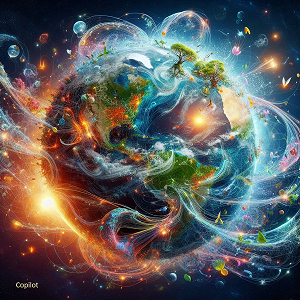
Let’s zoom out to the planet. Capra loved James Lovelock’s (2016) Gaia Theory, which says Earth acts like one giant living system. Its atmosphere, oceans, and creatures all interact to keep things balanced—like a global thermostat.
The Earth “self-makes” too, recycling materials and energy (think carbon cycles) while staying stable enough for life to thrive (Capra, 1996). It’s open to the universe—taking in sunlight, releasing heat—but organized in its own closed loop.
![Imagine organizations not as static structures but as living, breathing systems—dynamic networks of people, processes, and relationships that adapt and evolve, much like a human body, a tree, or the Earth. [Image: Copilot]](/images/Article-Pics/organizational-system300.png#joomlaImage://local-images/Article-Pics/organizational-system300.png?width=300&height=300)
![The Butterfly Effect in Action: A single flap sparks swirling chaos, from stormy skies to fiery markets. Order and randomness dance in vibrant unpredictability [Image: Grok (xAI)]](/images/Article-Pics/butterfly-effect250.jpg#joomlaImage://local-images/Article-Pics/butterfly-effect250.jpg?width=250&height=188)